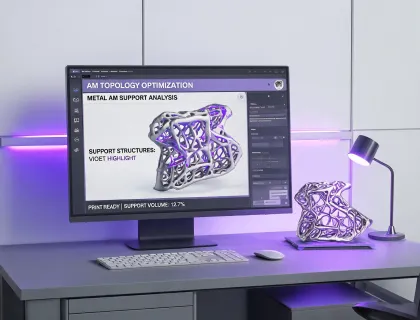
DfAM workstation
Support, overhang, lattice, and part consolidation risks are reviewed before release.
Ipg Photonics supports advanced tooling and equipment programs where a drawing alone does not explain the risk. The team connects DfAM review, laser process readiness, machining datum strategy, and inspection planning before the program becomes a purchase order.
"Complex geometry becomes useful only when it can be clamped, finished, inspected, documented, and repeated. Our role is to make that path visible early enough for engineering, sourcing, and quality to act together."
That principle shapes every RFQ conversation. A lightweight bracket may look efficient in simulation, but the real manufacturing question is broader: can powder be removed, can a datum be post-machined, can the surface finish be reached, can the laser or inspection tool access the important feature, and can the evidence package satisfy the final buyer? Ipg Photonics treats those questions as front-end scope, not late-stage correction.
The operating model is intentionally cross-functional. Design reviewers flag geometry risks, process engineers map build and equipment constraints, quality planners define FAI and CMM checkpoints, and sourcing specialists translate the result into a quote that can be compared. Instead of promising an unlimited capability range, the team documents where geometry, material, tolerance, and timing intersect. That makes tradeoffs explicit when there is still time to adjust the drawing or choose a different route.
Support, overhang, lattice, and part consolidation risks are reviewed before release.

Beam access, thermal path, and fixture changeover are checked as a system.
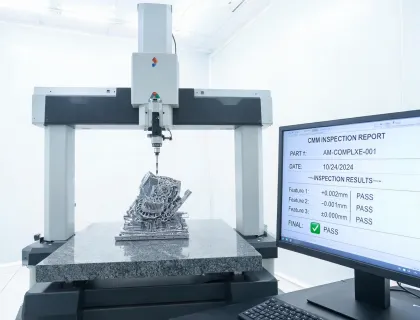
Critical dimensions are tied to the drawing and the final evidence package.
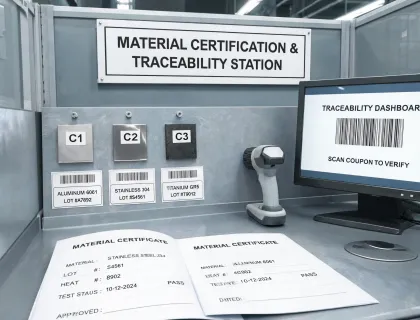
Material, revision, and shipment records stay connected to the quote scope.
Procurement teams often need more than a price. These reference documents help the internal review move from "can it be made" to "what evidence and risk controls are included."
The most useful early brief includes CAD, target material, annual usage, finish requirements, inspection level, and the feature that drives the design. Ipg Photonics will respond with route questions instead of a generic capability statement.