SVC-D vision driven

Engineering services for lightweight additive routes and laser-ready tooling.

The service model starts where normal equipment sourcing becomes too blunt: topology-optimized geometry, thermal access, beam clearance, post-machining datum plans, and evidence packages that must survive a sourcing review. Ipg Photonics organizes those variables into a route that procurement can quote and engineering can defend.

Horizontal service pillars

Four workstreams run in parallel instead of waiting in sequence.

Complex geometry programs lose time when each specialist waits for the prior answer. The RFQ desk brings design review, manufacturing path planning, laser equipment readiness, and quality documentation into one shared brief so the first quote is closer to the final build route.

DfAM and geometry screening

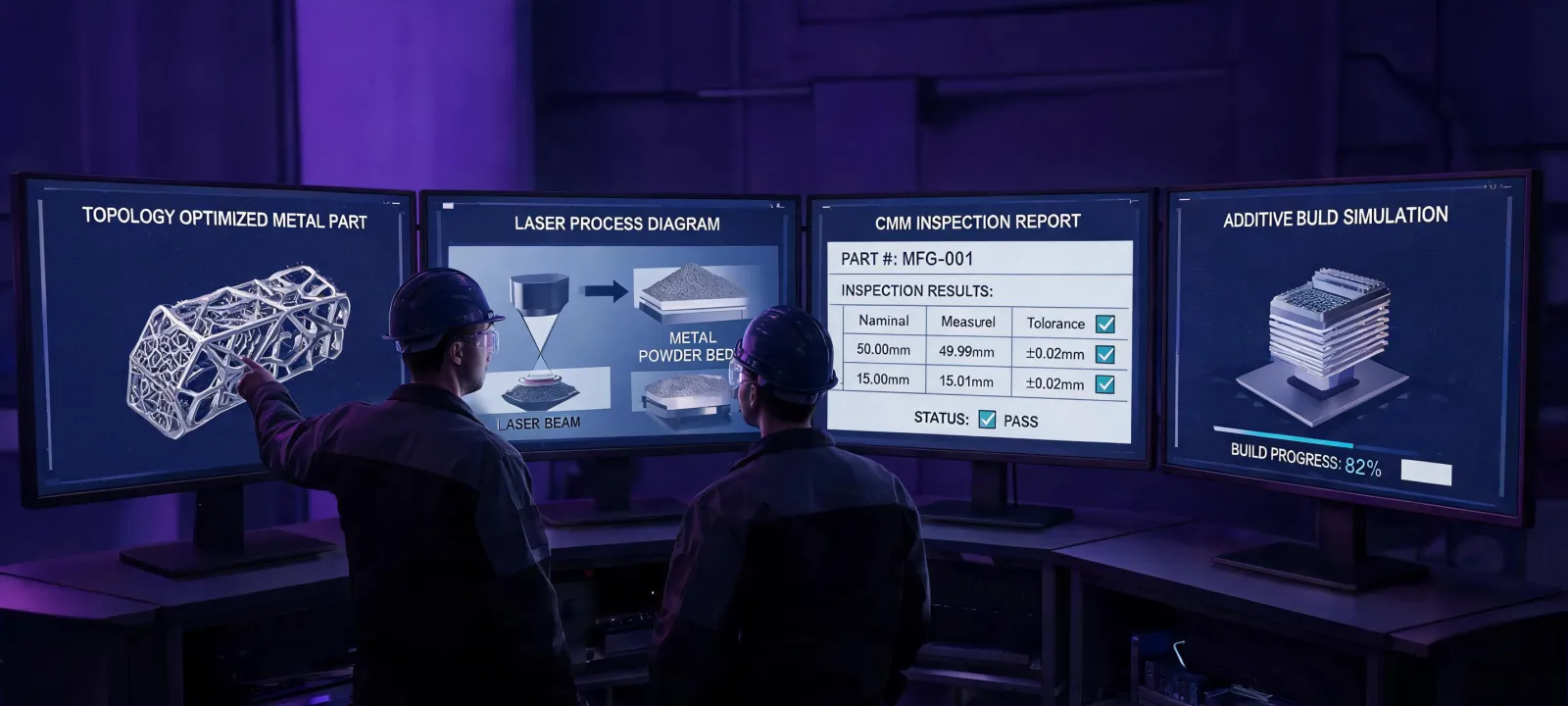
Engineers review wall sections, powder removal, support scars, lattice density, post-machining allowance, and inaccessible inspection zones. The output is a concise risk register rather than a generic "manufacturable" approval.
Laser process cell planning

Fixture faces, heat sinks, beam access, safety envelopes, cable routing, and operator changeover are checked before hardware is cut. That makes the tooling useful inside a cell rather than only attractive on a CAD screen.

Prototype to bridge route

Small batches can combine metal AM, high-speed machining, coating, and inspection without forcing the team to change suppliers at the moment a launch build gets serious.

Inspection and release evidence

FAI layouts, CMM checkpoints, material certs, revision logs, and packaging notes are connected to the quote so quality teams know what will be measured and what will be reported.

Counter animation grid

Impact numbers used as engineering signals, not decoration.

4.3M+laser and additive process observations indexed for recent review work.
9,443+build envelopes, fixture checks, and equipment interfaces compared.
33 yrsof photonics manufacturing discipline behind the review method.
42materials, coatings, and thermal behaviors mapped for route planning.
27documented release checks from CAD intake through shipment.

Program metrics are used for scoping and comparison. Final acceptance criteria are defined in the drawing, PO, and approved inspection plan.

Engineering review desk for additive tooling
Background image CTA

Share the drawing, the risk, and the date that cannot slip.

Use the RFQ form to describe tolerance-critical surfaces, target material, surface finish, expected annual usage, and the inspection evidence your customer will require. The review starts with the constraints that normally cause late quote revisions.